
The Making of a Masterpiece: Behind the Scenes of a Vikash Kalra Painting
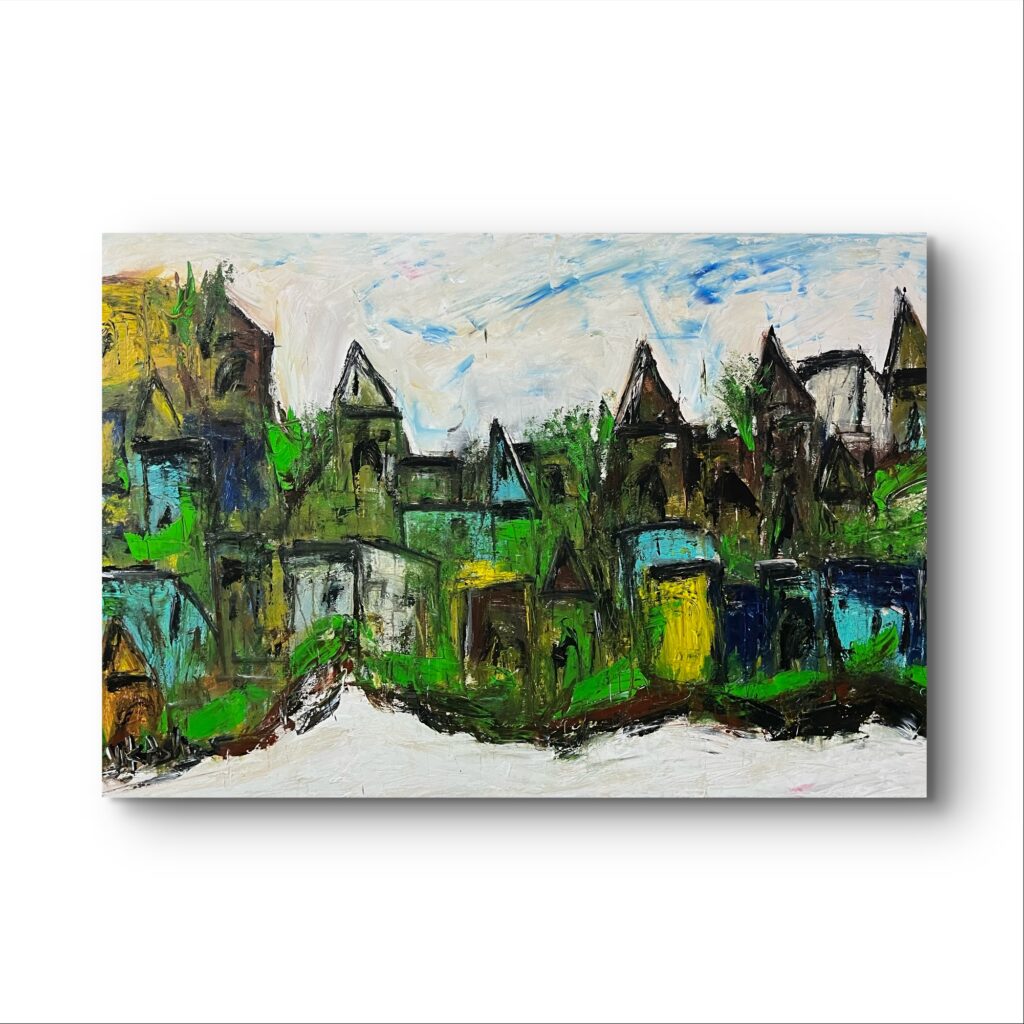
In the world of contemporary Indian art, few names evoke the raw intensity and emotive depth that Vikash Kalra does. Known for his instinctual, often meditative approach to painting, Kalra’s work speaks not just to the eye, but to the soul. Each canvas is a dialogue—a confession of the artist’s state of being at a particular moment in time.
But what goes into making a Vikash Kalra painting? What tools shape the strokes? What thoughts ignite the process? Let’s step behind the scenes and uncover the layered journey that leads to one of his expressive masterpieces.
A Painting Begins in Silence
For Vikash Kalra, the act of painting starts long before the brush meets canvas. It begins in a state of inward stillness. Meditation, solitude, and silence are often the fertile grounds from which his ideas emerge. Kalra describes the early moments as “not planning, but feeling.”
He avoids sketching outlines or detailed pre-concepts. Instead, he allows emotion to guide the flow. This approach sets his style apart, making each painting a spontaneous manifestation of the subconscious mind.
Tools of Expression: Beyond the Brush
While many artists lean solely on traditional tools, Kalra treats each instrument as an extension of his mood. He frequently alternates between:
Acrylics and inks for speed and texture
Charcoal and graphite for layered detailing
Spatulas, palette knives, and even fingers to create raw, tactile effects
Natural materials like sand, cloth, and thread for added depth
His paintings often blur the boundary between control and chaos. He isn’t afraid of imperfections. In fact, it’s within the “accidents” that new dimensions often emerge. He believes a painting must breathe, resist predictability, and contain life.
Color as Emotion
Color is never an afterthought in a Vikash Kalra painting. It’s central to the experience. Reds signify passion and protest. Blues often reflect longing or transcendence. Blacks and whites are rarely just decorative—they act as voids and light in the emotional topography of his art.
Rather than selecting a palette ahead of time, Kalra lets the mood guide the choice of color. He works in layers, often returning to a painting after days or weeks to add another coat, another emotion.
His use of bold, sometimes jarring contrasts reflects the inner conflicts that define much of modern existence—an existential thread that runs through his entire body of work.
The Role of Music and Poetry
Interestingly, Kalra’s process is deeply intertwined with sound and language. While painting, he listens to everything from classical Indian ragas to jazz and experimental ambient compositions. These auditory inputs aren’t just background noise—they help set the emotional tone of the work.
He’s also a lover of poetry—particularly the mystical verses of Rumi, Ghalib, and Kabir. Lines from poems sometimes influence the titles of his paintings or act as unseen frameworks behind the imagery.
Intuition Over Intellect
One defining characteristic of Vikash Kalra’s art is its rejection of over-analysis. His process doesn’t involve rigid calculations or artistic formulas. Instead, it’s about surrender. He often enters a “flow state,” painting for hours without pause, letting intuition dictate each stroke.
He’s fond of saying, “The painting knows more than I do. I just listen to it.” This humble, almost spiritual relationship with the canvas turns each painting into a conversation—a back-and-forth between the artist’s inner self and the unknown.
Revisiting and Letting Go
Unlike commercial art practices that require deadlines, Kalra allows time to do its work. He may leave a painting unfinished for months, only to return with fresh eyes and finish it in 10 minutes.
Letting go is an essential part of his method. He never clings to what the piece “should” be. If it needs to be destroyed and reborn, so be it. Many of his most famous paintings are second or third iterations on the same canvas.
The Final Stage: Connection With the Viewer
Once a painting is complete, Kalra believes it no longer belongs to him. “It becomes a mirror,” he says, “reflecting the one who sees it.” His work is not designed to instruct, but to evoke.
Displayed on digital platforms like Maximum Ego, his paintings now travel across the globe—finding collectors and admirers in New York, Paris, Tokyo, and Berlin. Selling art online has opened up new dimensions of connection, allowing people from different cultures to experience the soul of his work.
Why the Process Matters
In today’s fast-paced digital world, art can often become commodified. But Vikash Kalra reminds us that the process of painting is as important as the final piece. Each drop of ink, each unpredictable brushstroke, holds within it a part of the artist’s consciousness.
His process is not just about technique—it’s a philosophy. A way of engaging with the world that embraces chaos, celebrates intuition, and elevates emotion as a guiding force.
Conclusion: Painting as a Spiritual Act
To witness the making of a Vikash Kalra painting is to witness a ritual of transformation. It’s where silence gives rise to sound, where emotion finds form, and where the canvas becomes a living entity.
Behind every bold color, every raw edge, and every abstract form lies a story—untold but deeply felt. As we admire his work on platforms like Maximum Ego, we’re not just looking at art. We’re looking at a spiritual echo—a piece of the artist’s inner world offered to the viewer without reservation.
And that is the true masterpiece.