
Beyond the Brush: Spiritual Energy in the Art of Expressionism by Vikash Kalra
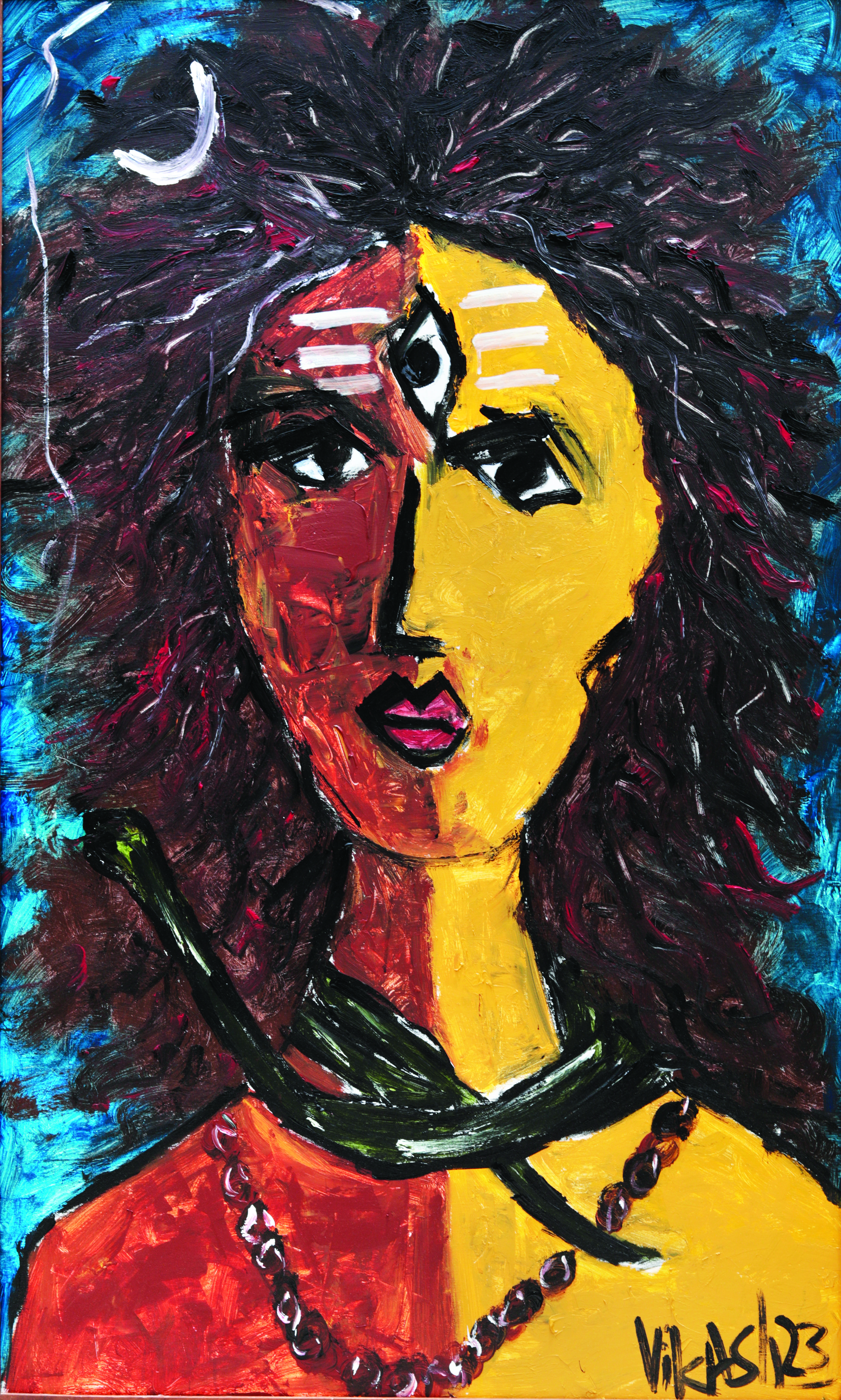
In the world of modern Indian art, few names resonate with such a profound spiritual presence as Vikash Kalra. His creations transcend traditional technique and become vessels of emotion, intuition, and raw energy. Through the art of expressionism, Kalra breathes life into canvas—not just with color and composition, but with soul.
This article explores how Vikash Kalra’s unique expressionist approach is deeply rooted in spiritual energy, intuition, and the subconscious. His works are not just visual experiences—they are spiritual dialogues.
The Art of Expressionism: A Brief Context
The art of expressionism has long been associated with emotional intensity, bold colors, and distorted forms. Originating in early 20th-century Europe, it was a rebellion against realism—a way for artists to depict what they felt rather than what they saw.
Vikash Kalra’s work is a perfect example of how the art of expressionism evolves in a contemporary Indian context. It moves beyond angst or turmoil and enters a realm of meditative, transcendental reflection.
A Spiritual Core
At the heart of Kalra’s practice lies a deep spiritual calling. He has often described his studio not as a workspace, but as a sacred space. His painting sessions are intuitive, often spontaneous, guided not by plans or sketches but by emotion, meditation, and energy flow.
Kalra once stated, “I don’t paint to please, I paint to release.” This deeply spiritual philosophy forms the backbone of his work in the art of expressionism.
Intuition Over Intellect
Unlike many academically trained artists, Kalra’s method is rooted in intuition. He allows the painting to unfold organically, often entering a near-meditative state as he creates. This intuitive approach mirrors spiritual practices like Zen calligraphy or Sufi whirling, where the act becomes the prayer.
His canvases are not mapped—they’re discovered. Each brushstroke is a reflection of the moment’s emotional truth. This raw honesty is what gives his art an unmistakable power.
Energetic Strokes and Vibrant Chaos
A hallmark of Kalra’s expressionist style is his energetic brushwork. His strokes seem to vibrate with life, echoing both inner peace and spiritual turbulence. His use of bold, often clashing colors is not random—it’s channeled.
In many works, the seemingly chaotic visuals symbolize a spiritual release. The figures he paints—distorted, elongated, or fragmented—represent the human condition trying to break free from material boundaries.
The art of expressionism, in Kalra’s hands, becomes a language of liberation.
From Silence to Symbolism
Kalra’s spiritual depth is reflected in his use of symbols—eyes, birds, flowing limbs, and empty spaces that evoke cosmic silence. His visual vocabulary speaks to ancient Indian mysticism while embracing a universal modern sensibility.
There is a recurring theme of duality—dark and light, pain and ecstasy, chaos and calm. This mirrors the balance central to yogic and spiritual philosophies.
Expressionism as a Meditation
For Vikash Kalra, painting is not performance—it is meditation. He often works in silence, allowing the vibrations of the colors, textures, and gestures to dictate the next move. There is no ego in his art. In fact, the art of expressionism here serves as a tool to dissolve the ego.
His paintings are journeys into the self, invitations for viewers to pause, breathe, and reflect on their own inner landscapes.
Global Appeal Rooted in Spirituality
Kalra’s spiritually charged expressionism has found admirers around the world. Collectors and galleries across Europe, the Middle East, and the U.S. have recognized the universal resonance of his work.
While deeply Indian in spirit, Kalra’s paintings communicate in the global language of emotional truth. The art of expressionism allows him to transcend language, geography, and even form—speaking directly to the human soul.
Why His Work Matters Today
In an age overwhelmed by digital overload and superficiality, Vikash Kalra offers something rare—depth. His work invites stillness, demands presence, and encourages spiritual introspection.
As the modern world increasingly seeks mindfulness and meaning, the art of expressionism as practiced by Kalra becomes not just relevant—but essential.
Conclusion: Art as Energy, Not Object
Vikash Kalra doesn’t just create art. He channels energy, spirit, and truth through the expressionist medium. His paintings are not products but portals—leading us beyond the brush, beyond the canvas, into realms of feeling and spirit.
Through the art of expressionism, he gives form to the formless, voice to silence, and color to the unseen.