
From Mind to Canvas: The Psychology of Art and Visual Storytelling in Kalra’s Paintings
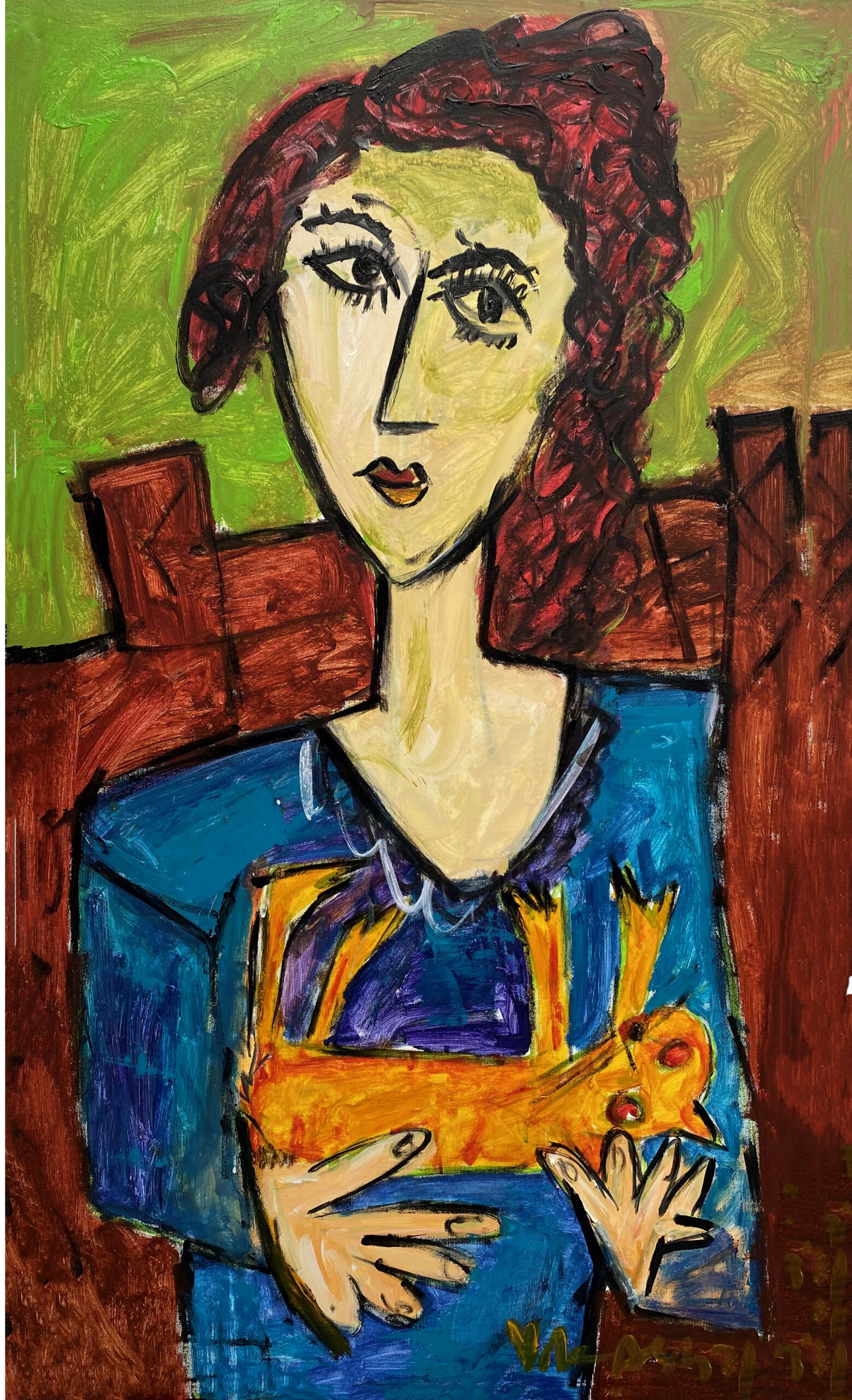
Art is more than just color and composition. It’s a mirror to the subconscious, a visual expression of what words often fail to articulate. In the case of Vikash Kalra, an acclaimed Indian artist, the bridge between mind and canvas is deeply psychological. His work invites viewers into a space where emotion, thought, memory, and experience collide — forming powerful visual narratives.
Kalra’s unique ability to fuse art and visual psychology elevates his creations into emotional experiences. This article explores the profound connection between Kalra’s inner world and the visual manifestations of his thoughts — showcasing how his paintings are, at their core, a study of the human mind.
Understanding the Psychology of Art and Visual Language
The psychology of art involves the mental processes behind the creation and perception of visual imagery. It considers how artists communicate ideas, emotions, and internal struggles through abstract and figurative means.
Vikash Kalra’s paintings are deeply aligned with this concept. Whether it’s his dynamic strokes, spiritual undertones, or layered color schemes, each work tells a story — not just of the artist, but of shared human emotion. His brush is his subconscious, and the canvas, a projection of thought.
Kalra’s Emotional Landscapes: Abstract as Intuition
Kalra often embraces abstraction in his work — a style that bypasses logical interpretation and taps directly into the viewer’s feelings. This intuitive approach reflects how the mind processes complex emotions.
In many of his paintings, swirling textures, raw lines, and imperfect symmetry suggest emotional tension and freedom simultaneously. The absence of defined figures allows the viewer to project their own feelings into the work, making each piece an interactive visual artwork grounded in psychology.
Symbols of the Subconscious: Decoding Kalra’s Visual Elements
Kalra frequently incorporates recurring symbols such as the human face, circular motifs, and spiritual icons. These are not random choices — they are visual manifestations of deeper psychological themes.
Faces: Often distorted or incomplete, they reflect identity, self-awareness, and the human condition.
Circles and Spirals: These may symbolize cycles of thought, time, and transcendence.
Color Palette: His frequent use of warm, earthy tones evokes grounding energy, while flashes of bold reds or deep blacks hint at emotional extremes like passion or despair.
Such elements make Kalra’s work a kind of visual storytelling — rich in metaphor, yet accessible to the subconscious mind.
Art as Therapy: A Psychological Need to Create
For Vikash Kalra, art is not merely a profession — it is a need. Many of his paintings feel spontaneous, as if pulled directly from his thoughts in the moment. This mirrors the concept of art as therapy, where the act of creation helps process inner turmoil or spiritual longing.
Kalra has spoken about painting as meditation, where the mind becomes silent and the hands move instinctively. This aligns with psychological research suggesting that intuitive, unfiltered creation can unlock parts of the mind inaccessible through words.
His visual storytelling becomes a healing process — not just for himself, but for anyone who stands in front of his canvas and resonates with its message.
Telling Stories Without Words: A Visual Narrative Style
One of the most intriguing aspects of Kalra’s work is his ability to tell stories without linear plots. Each canvas is a moment suspended in time — open-ended, but emotionally complete.
In this, he mirrors the human experience: fragmented memories, fleeting emotions, unexplained fears — all of which we feel but can’t always explain. Kalra captures that chaos and gives it visual structure, turning the abstract into shared understanding.
From this perspective, Kalra’s paintings function as a form of psychological storytelling, where emotions replace characters, and brushstrokes replace words.
The Viewer’s Mind: A Shared Psychological Journey
One hallmark of successful art and visual storytelling is the way it invites the viewer to become part of the story. Kalra’s work achieves this through ambiguity, depth, and suggestion. Viewers interpret his art through the lens of their own emotions and experiences.
This shared psychological journey turns his paintings into mirrors — each person sees something different, yet all are touched by the same essence.
Blending Art and Visual Philosophy: Spiritual Depths
Beyond psychology, Kalra’s paintings carry spiritual weight. His process is intuitive and often meditative, suggesting a connection to something greater than the self. In many ways, his art becomes a visual dialogue between the mind and the soul — a key characteristic of expressionism.
The visual result is a harmonious blend of art and visual philosophy, where every piece serves as both a question and an answer.
Why Vikash Kalra’s Art Matters in Today’s World
In an age of distraction, superficiality, and fast-paced content, Kalra’s work reminds us of the slow, introspective power of visual art. His focus on the psychological and emotional depth behind each piece gives audiences something rare — authenticity.
Vikash Kalra does not paint to please trends. He paints because his mind demands it. And in doing so, he opens doors for viewers to reconnect with their own subconscious truths.
Conclusion: The Canvas as a Mind Map
From chaotic swirls to serene stillness, Vikash Kalra’s paintings reflect the journey from thought to form. They are meditations, visual poems, emotional confessions, and psychological maps — all rolled into one.
Through a masterful understanding of art and visual storytelling, Kalra offers more than just images. He offers connection. He offers truth. He offers the beauty of the mind, revealed in color and line.